Switcher 2026: The iPad Pro Has an Achilles Heel (Almost) No One Talks About ⭐
- Paul Thurrott
- Jun 01, 2026
-
5
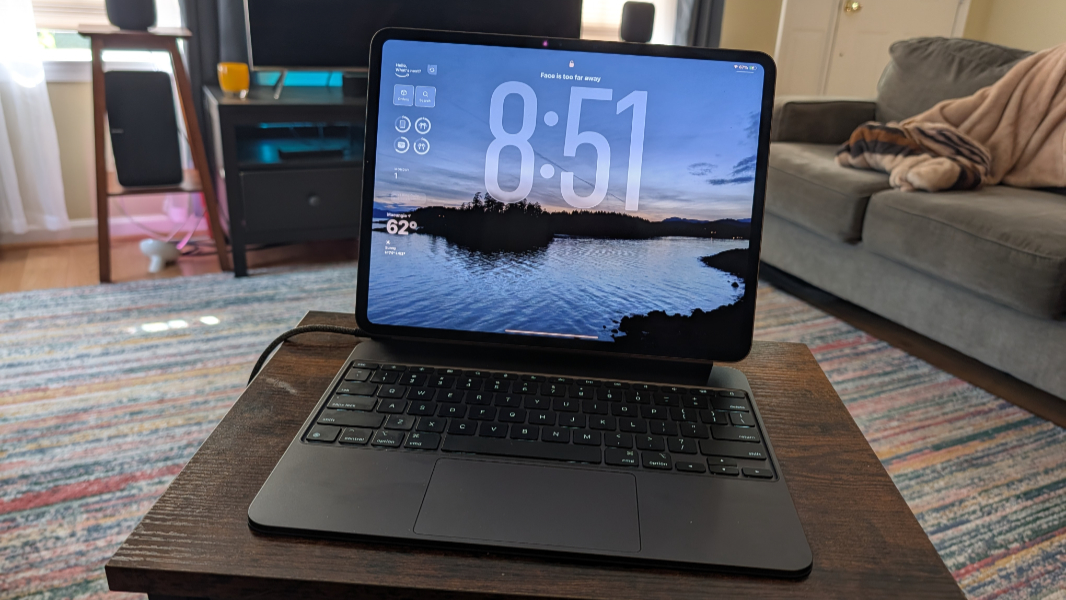
to the power of iPadOS 26 and its incredible hardware, the iPad Pro M5 should be the ultimate iPad. But there’s just one problem, and it’s an issue I’d never noticed in any reviews.
The battery life is terrible.
It’s terrible compared to my previous iPads, most recently an 11-inch iPad Air M3, but also compared to all current non-Pro iPads and every iPad I’ve ever owned. And I’ve owned a bunch of them.
It’s particularly terrible compared to my two-year-old MacBook Air M3 15-inch, which has a larger display and a more powerful–and, yes, complex–OS platform. The only asterisk here is that the iPad Pro M5 probably gets better battery life than a MacBook Neo based on the reviews I’ve read. And of course that Mac’s other limitations make it a lot less appealing anyway.
📝 What the reviews said
This is me, so I could have just missed something. It’s not like I spend my life pouring over iPad reviews. But I did read two or three of them, and my experiences over the past three days caused me to look up some more. An AI overview in Google Search doesn’t mention battery life as a pro or a con in its summary, which is perhaps telling. But what about the actual reviews?
They’re all over the map, go figure. But the warnings are there. Sometimes.
👎 Engadget dicks around the issue, noting that the thinness of the device prevented Apple from including a larger battery, so its uptime is the same as the previous-generation Pro. But it never describes real-world battery life, even generally as being good or bad. Instead, it just gives Apple an incredible out: “A tablet is meant to be held in your hands and carried around with you even more so than a laptop,” the reviewer writes, “so I understand why Apple values portability over extending the iPad Pro’s battery life.” Coward.
👍 Gizmodo put “solid battery life” as a pro and noted that it has “surprisingly strong battery life.” But then it issued a caveat warning that “it’s far from an ‘all-day’ device if you plan to use it as routinely as you may on a Mac.” That seems like a pro, not a con, since this thing has the word “pro” in its name.
👎 The word “battery” doesn’t even appear in CNET’s review, which seems impossible and seriously undercuts anything that publication has to say about this or any devices. Seriously, that’s insane.
👍 AppleInsider, of all publications, is honest about the battery life, writing that “one surprise I have had is how quickly I can make this battery go down. I haven’t timed it and my work hasn’t been consistent enough to spot patterns, but still that battery goes down fast.” It then places battery life in its cons list and adds, “There’s nothing else wrong with this device than its battery life. Even then, I feel like I’m exaggerating, but it is the one thing I’ve repeatedly noticed.” This is the one review that maps exactly to my (admittedly short) experience so far.
👎 Tom’s Guide puts battery life in its pros list and notes that the iPad Pro M5 features “the same long-lasting battery life of its predecessor.” But its battery life measurement is based on a benchmark, not real world testing, and the publication even admits that it “only had time to run one battery test on the iPad Pro.” But no worries, it’s confident that “the one battery test we did conduct reveals a tablet that can last well beyond a standard 8-hour workday.” For the love of God.
👍 PC World says battery life “could be longer” and puts this attribute in its cons list. Like most publications, it bases its battery life measurements on benchmarks, but it also added a note about “real-world usage” (a mix of browsing, video streaming, doom-scrolling, and GarageBand, of all things) somehow resulting in “it easily reaching the 10-hour mark.” That seems unlikely.
🪄 The loss of magic
If you’ve ever used an iPad–or a MacBook Air, for that matter–you’re familiar with the magical nature of the battery life of these devices. It’s so good you stop thinking about it. But before that happens, you can do things like read for an hour or more in the morning and then see that the iPad, which started the day fully charged, lost perhaps 1 percent of battery life during this time. It doesn’t make sense, but you get used to it, and then what doesn’t make sense is the poor battery life of your other devices.
Obviously, I am using the iPad Pro like a laptop. For example, Saturday morning, I woke up, read for a bit, and then started writing using iA Writer, a Markdown editor, referencing articles on the web using Firefox, and I edited a few images using Affinity Photo 2, all on the iPad Pro. I wasn’t thinking about and didn’t make note of the battery life at the time because my head wasn’t in that space yet, but I do know that I charged the iPad after that was done, and that I was surprised I needed to do that.
Since then, I’ve experienced the same issue with battery life, even when I don’t use it has “heavily” as what’s described above. (My MacBook Air wouldn’t have blinked from such usage, battery life-wise.) I spent most of Sunday writing and doing other work, for example, but that was all on Windows laptops, mostly one of them: I wrote all of the IdeaPad Slim 5x review on that laptop, of course, including on Sunday, when I also downloaded and edited the photos for that review. I used it on battery all day and didn’t need to charge it once: That device has solid battery life.
🙈 The problem(s)?
This is an interesting problem. I don’t recall noticing this issue with previous iPad Airs, especially the 11-inch model I used as a productivity laptop when writing about the advances in iPadOS 26. That said, I had used the iPad Air almost exclusively with a Magic Keyboard since buying that peripheral (with a short exception this past Spring when I tested using the iPad without it). And when I switched to using the Magic Keyboard, I could see that the overall battery life went down a bit, not too much, but enough that I noticed it. So that is part of the problem.
But it’s not the whole problem.
One issue is basic physics, as the thinness of the iPad Pro suggests a small-ish battery. And sure enough, if you measure the energy consumed per hour, the iPad Pro M5 is 39 watt-hours, while the MacBook Air M5 is 66.5 watt-hours. I can say anecdotally that the iPad Pro’s battery life is nowhere close to two-thirds that of the MacBook Air, however. (My older MacBook Air appears to be identical to the M5 model when it comes to the batteries.)
So software has to be an issue, too. Meaning iPadOS itself, but also the apps and services that run on top of it.
Yes, iPadOS multitasks, but the iPad was originally designed and is still optimized for touch-first interactions with a single app on-screen. And it’s worth noting that the new capabilities in iPadOS 26, most obviously its support for background processes, is a 1.0 effort. It could and hopefully will benefit from efficiency improvements in these productivity scenarios in future updates. And apps present a similar issue, as third-party developers are even less familiar with these changes than Apple.
But here’s the thing. I noted above that I spent all of Sunday working on Windows laptops. This means that I used the iPad Pro for reading in the morning and then for reading again before I went to bed and not much else. But I still needed to charge it that day. This is my first ever experience with an iPad that almost certainly will need to be charged daily. No matter how I use it.
I need more time with it to be sure. Perhaps battery life will improve a bit in time; I do see that with some laptops, go figure. But my goal with the iPad Pro wasn’t to spend an exorbitant amount of money on something that doesn’t work well, it was to specifically determine whether the device makes sense for someone switching from a Windows laptop. That is, I don’t want to use the iPad Pro the same way I used previous iPads, I want to use it as an iPad–for reading and other consumption-type tasks–and as a productivity laptop. I want the hybrid dream to become a reality.
🧐 Rethinking things
The battery life issues I’m seeing are a wrench in my plans, but also an opportunity to rethink the way I do things. For example, when I use an x86/64-based Windows laptop, as I do for reviews, I think little of leaving it plugged into power when I’m working at home (or, if I’m traveling, in whatever other fixed location). This is particularly important because these relatively inefficient laptops actually run faster when plugged in, whereas a MacBook Air, iPad, or Snapdragon X-based laptop does not. But there’s nothing stopping me from plugging in the iPad Pro while I’m working–i.e. using it for productivity tasks–and then using it untethered when reading and the like. Well, there is one thing, a sort of mental conditioning from the previous 15+ years of iPad usage.
I hadn’t expected to even think about battery life, of course. But tethering a laptop–or an iPad Pro–isn’t all that far-fetched. I tend to work with just a laptop even when I’m home, as I can move around the place if needed. But many work from a desk where they might have a dock/hub, a larger display, a full-sized keyboard, a mouse, and whatever else. And the iPad, like a laptop or other computer, would be plugged into power for the duration in that scenario. I will test this configuration, obviously, but it’s not the way I normally work anymore.
I’m not giving up on the iPad Pro M5, if you’re curious. The larger display matters to me greatly, as does the keyboard backlighting on the Magic Keyboard that’s for some insane reason exclusive to the iPad Pro versions. Facial recognition , in this case via Face ID, makes a huge difference, especially given how awkward Touch ID is on the iPad Air. The performance is incredible, the elegance and simplicity of iPadOS is undeniable and desirable, and much of what I need to do each day works very well, right now. There’s a lot to like here.
But the battery life? I did not expect this.
And here’s a final bit of real-world data. When I started writing this article, yes, in iA Writer on the iPad Pro, it had 86 percent battery life. Finishing this up, and having done nothing on the device but write and look up a few battery specifications on the web, it stands at 65 percent battery life a bit over an hour later. So that’s about five hours of battery life on a charge is nothing else changes. So, yes. I will be paying attention to battery life now.

Gain unlimited access to Premium articles.
With technology shaping our everyday lives, how could we not dig deeper?
Thurrott Premium delivers an honest and thorough perspective about the technologies we use and rely on everyday. Discover deeper content as a Premium member.